



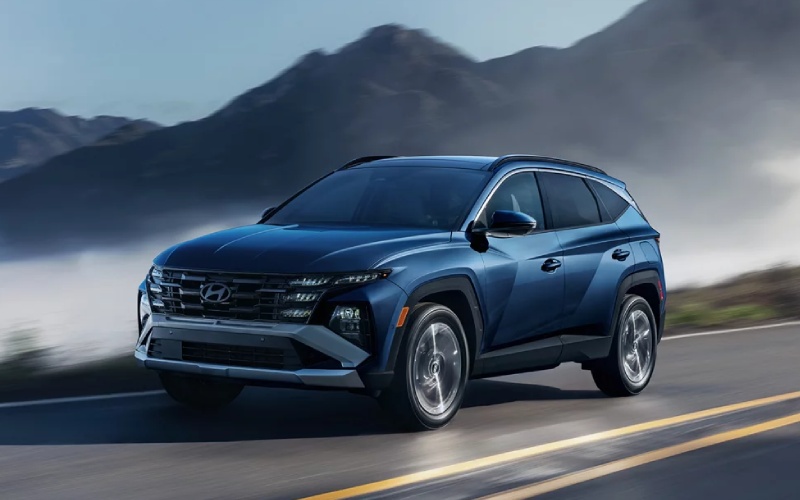
Hyundai of Grand Island – How does regenerative braking on the 2026 Hyundai Tucson Hybrid make everyday driving easier near St. Paul, NE?
Driving from St. Paul to Grand Island, you encounter stoplights, rolling country roads, and stretches of highway that invite smooth cruising. The 2026 Hyundai Tucson Hybrid turns that everyday mix into an efficiency advantage thanks to regenerative braking. At Hyundai of Grand Island, we are asked how this system actually works in real life and what you will feel behind the wheel. Here is a clear, local-friendly explanation so you know what to expect long before your test drive.
At its core, the Tucson Hybrid pairs a turbocharged 1.6-liter engine with an electric motor for a combined 231 horsepower, a refined six-speed automatic transmission, and standard HTRAC All Wheel Drive. Regenerative braking is the bridge that helps the electric motor recapture energy you would normally lose as heat when slowing down. When you lift off the accelerator or press the brake pedal, the electric motor reverses roles and acts as a generator, converting the vehicle’s momentum into electricity that is stored in the hybrid battery. That stored energy assists the motor on your next takeoff, so the Tucson Hybrid feels responsive at city speeds while using less fuel. EPA information for the 2026 model year is pending, but the previous Tucson Hybrid achieved up to 38 mpg combined, and the same efficient philosophy carries forward for 2026.
What does this mean for your daily routine around Howard County? It behaves intuitively, requires no special charging, and works quietly in the background. The instrument cluster shows real-time energy flow, and the brake pedal is tuned for a natural, consistent feel as the system blends regenerative and traditional friction braking. You get smooth, confident deceleration while the vehicle does the energy math for you.
- Energy recovery during coasting and braking that helps power your next acceleration
- Natural brake pedal feel with smart blending between regenerative and friction braking
- Helpful insights on the dual 12.3-inch displays that visualize energy flow and efficiency
- Drive modes that influence how aggressively the system balances efficiency and response
- Confidence from HTRAC All Wheel Drive when roads turn wet or snowy around Nebraska
If you want to get the most from regenerative braking on local roads, a few simple habits amplify the benefits without changing your driving personality. The Tucson Hybrid rewards smooth inputs, anticipation, and gentle speed adjustments. Think of it as letting the vehicle glide a bit more and stopping a touch earlier when traffic allows, especially as you approach the US 281 corridor or St. Paul’s main intersections.
- Lift off the accelerator earlier so the system can harvest more energy before you brake
- Use steady, progressive brake pressure to maximize regeneration and maintain comfort
- Select Eco mode for everyday errands to favor efficient power delivery
- Keep tires properly inflated for reduced rolling resistance and consistent stopping
- Plan your route to minimize hard stops and capitalize on gentle deceleration zones
Winter brings unique questions. Cold temperatures can temporarily reduce how much energy the battery accepts, so you may notice less regeneration during the first miles of a frosty morning. As the vehicle warms, the effect improves. HTRAC All Wheel Drive enhances traction so deceleration remains controlled when surfaces are slick. The Tucson Hybrid’s brake system seamlessly shifts between regenerative and friction braking to prioritize stability, which is exactly what you want when snow or slush appears between St. Paul and Grand Island.
Because the electric motor frequently handles a portion of the deceleration, brake components can experience less wear in typical mixed driving. That does not mean maintenance goes away. Our factory-trained technicians at Hyundai of Grand Island inspect the entire system during routine service, keep software up to date, and ensure your Tucson Hybrid continues to regenerate efficiently mile after mile.
Beyond efficiency, the Tucson Hybrid complements its smart powertrain with technology that makes everyday life easier. Wireless Apple CarPlay and Android Auto come standard for simple phone integration, and the available dashboard layout with dual 12.3-inch displays presents navigation, audio, and hybrid information clearly. Hyundai SmartSense driver-assistance features, such as Lane Keeping Assist, Forward Collision-Avoidance Assist with Pedestrian Detection, and available adaptive cruise with lane-centering, add calm to your commute while you focus on the road ahead.
Regenerative braking does not ask you to change your life. It gives energy back to you each time you slow down, it feels natural from the first drive, and it pairs with HTRAC All Wheel Drive to deliver confident control across Nebraska seasons. If you are ready to feel how effortlessly the Tucson Hybrid gathers energy around St. Paul’s stop-and-go moments and on relaxed highway stretches toward Grand Island, our team is here to help you experience it in person.
Frequently Asked Questions:
Do I need to do anything special to use regenerative braking on the 2026 Tucson Hybrid?
No action is required. The system automatically engages when you lift off the accelerator or press the brake pedal. You can enhance efficiency by anticipating stops and braking smoothly, but the Tucson Hybrid manages regeneration for you.
Will the brakes feel different compared with a non-hybrid SUV?
The Tucson Hybrid is tuned for a natural, confidence-inspiring pedal feel. You may notice a very smooth initial slowing as regeneration starts, followed by traditional braking as needed for stronger stops. Most drivers adapt instantly.
What happens if the hybrid battery is near full on a long downhill?
When the battery approaches its preferred charge window, the system blends in more friction braking to maintain safe deceleration. You still get consistent stopping performance, and HTRAC All Wheel Drive works to support stability on low-grip surfaces.
Does regenerative braking help my brake pads last longer?
In typical mixed driving, many owners see reduced brake wear because the electric motor handles a portion of deceleration. Real-world results vary with terrain and driving style, and our service team can advise on maintenance intervals for your usage.
Is the Tucson Hybrid a plug-in vehicle?
The Tucson Hybrid does not require plugging in and recharges its hybrid battery through regenerative braking and engine operation. For shoppers seeking an electric-only range with home or public charging, the Tucson Plug-in Hybrid is available separately.
We invite you to visit Hyundai of Grand Island, serving Central City, Ord, and Aurora, to explore the 2026 Hyundai Tucson Hybrid, see regenerative braking in action on local roads, and learn how our team can tailor a test route that mirrors your daily drive from St. Paul. Our goal is to help you get more from every mile with technology that makes sense year-round in Nebraska.
Request more 2026 Hyundai Tucson Hybrid information
Connect with us


Hyundai of Grand Island

Address
3312 West Stolley Park Road
Grand Island, NE 68803
Phone
- Sales 308-318-3282308-318-3606
- Service 308-318-3848
- Parts 308-318-4342
| Monday | 8:00AM - 7:00PM |
| Tuesday | 8:00AM - 7:00PM |
| Wednesday | 8:00AM - 7:00PM |
| Thursday | 8:00AM - 7:00PM |
| Friday | 8:00AM - 7:00PM |
| Saturday | 8:00AM - 6:00PM |
| Sunday | Closed |
| Monday | 7:30AM - 6:00PM |
| Tuesday | 7:30AM - 6:00PM |
| Wednesday | 7:30AM - 6:00PM |
| Thursday | 7:30AM - 6:00PM |
| Friday | 7:30AM - 6:00PM |
| Saturday | Closed |
| Sunday | Closed |
| Monday | 8:00AM - 5:00PM |
| Tuesday | 8:00AM - 5:00PM |
| Wednesday | 8:00AM - 5:00PM |
| Thursday | 8:00AM - 5:00PM |
| Friday | 8:00AM - 5:00PM |
| Saturday | Closed |
| Sunday | Closed |